
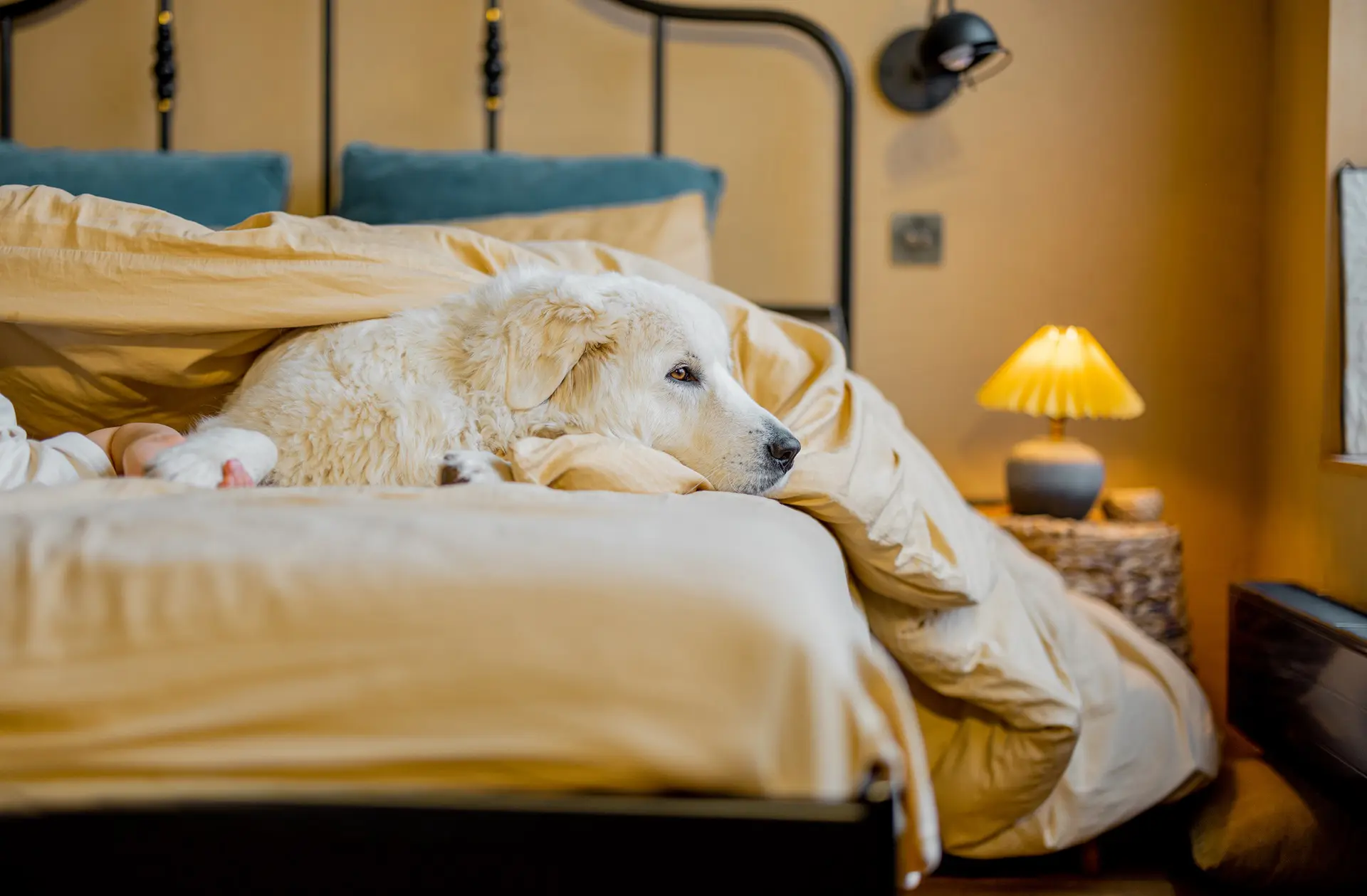
Pet messes on bedding come in many forms—urine, drool, dirt, and fur. The challenge is these messes don’t just stay on the surface. They often seep into the fibers, leaving behind stains, odors, and bacteria. On top of that, various types of bedding materials, from cotton to down, require different cleaning approaches.
If you’ve ever felt overwhelmed staring at your soiled bed wondering where to even start, you’re not alone and you’re definitely not helpless. By the end of this guide, you’ll know exactly how to handle any accident your furry friend throws your way, all while keeping your comforters, pillows, and blankets in great condition.
What to Do First When Your Pet Makes a Mess on Your Bedding
Cleaning up after your pet isn’t exactly the most glamorous part of owning one, but it’s a reality all dedicated pet owners face. The key to managing the mess (and saving your bedding) is acting fast, but without panicking.
1. Remove Solid Messes Without Smearing
- If the mess involves solids like mud or pet accidents, gently scoop or scrape it off using a paper towel, plastic spatula, or even the edge of a credit card.
- Avoid pressing down or smearing it into the fabric—it’s much easier to clean a surface stain than one deeply embedded in your comforter or duvet.
2. Blot, Don’t Rub, to Absorb Liquids
- For liquid messes like urine or drool, grab a clean microfiber cloth or paper towel and gently blot the area.
- Rubbing spreads the mess and pushes it deeper into the fibers, making cleanup tougher later on.
- Apply light pressure and let the cloth soak up as much moisture as possible, starting at the edges to contain the spill.
3. Pretreat the Area with a Gentle Solution
This step is essential for protein-based stains like urine or vomit, which can set quickly if left untreated.
- Use an enzyme-based cleaner or a DIY mix of white vinegar and water to pretreat stains and neutralize odors.
- Spray the solution lightly on the stain, let it sit for 5-10 minutes, and then blot again with a clean cloth.
4. Check Your Bedding’s Care Label
Before tossing your bedding into the wash, check the label for specific cleaning instructions. Cotton, microfiber, silk, and down-filled comforters all require different cleaning approaches, so make sure you follow the correct method to avoid damage. If the instructions aren’t clear, consider professional dry cleaning to ensure proper care.
5. Isolate the Mess to Protect the Rest of Your Bed
This simple step helps preserve the cleanliness of your bedroom while you focus on cleaning the mess.
- Carefully remove soiled bedding layer by layer, folding the mess inward to avoid spreading it.
- Use a waterproof mattress protector, towel, or sheet to shield your mattress and pillows from further contamination.
How to Clean Specific Messes
No matter how often you groom your pets or how well-trained they are, accidents can and will happen. From muddy paw prints to urine stains, each type of mess presents its own set of challenges. And so, knowing the proper approach for each mess saves you time, frustration, and, most importantly, your bedding.
Urine
Urine is one of the trickiest messes to clean because it seeps into the fabric and leaves behind a strong odor if not handled properly.
DO’s:
- Blot the area immediately with a clean, absorbent towel to soak up as much liquid as possible.
- Pretreat the stain with an enzyme-based cleaner to break down the proteins in the urine. Let it sit for 15–20 minutes before rinsing.
- Wash the bedding in the washing machine on a cold cycle first (hot water can set the stain) and follow up with a warm water wash. Use a high quality laundry detergent for better results.
DON’Ts:
- Don’t use bleach, as it can react with the ammonia in urine and make the odor worse.
- Avoid rubbing the stain; it can push the mess deeper into the fibers.
- Don’t skip the enzyme cleaner—it’s key to eliminating both stains and odors.
Mud and Dirt
Muddy paw prints or dirt from a playful romp in the yard are common culprits that make their way onto your bed.
DO’s:
- Let the mud dry completely before attempting to clean it. Trying to clean wet mud can smear it, making the stain worse.
- Once dry, gently brush off as much dirt as possible using a soft-bristled brush or vacuum.
- Use a stain remover spray or a mixture of laundry detergent and water to pretreat any remaining marks before washing.
DON’Ts:
- Don’t throw muddy bedding directly into the washer—it can clog your machine and spread around the dirt.
- Avoid soaking the mud in water; soaking can cause it to further penetrate the fabric.
Fur and Pet Hair
Fur might not stain your bedding, but it can cling to fabrics and cause issues for those with allergies.
DO’s:
- Use a lint roller or a pet hair remover tool to lift fur from the surface of your bedding before washing.
- Toss the bedding into the dryer on an air-fluff or no-heat setting with dryer balls to loosen the fur. Empty the lint trap afterward.
- Wash the bedding separately to avoid transferring fur to other items.
DON’Ts:
- Don’t rely on the washing machine alone to remove fur—it can clump and stick to your bedding.
- Avoid skipping the pre-wash fur removal step, as pet hair can create a lint-like residue on other laundry.
Drool and Saliva
Drool might seem harmless, but over time it can leave stains and odors if not cleaned properly.
DO’s:
- Blot fresh drool with a clean, dry cloth to remove excess moisture.
- Pretreat the stain with a mild soap or a vinegar-water solution to neutralize any lingering odor.
- Wash the item in warm water with a detergent designed for tough stains.
DON’Ts:
- Don’t let drool stains sit too long—they can harden and become tougher to clean.
- Avoid using hot water initially, as it can set the proteins in saliva.
Vomit or Regurgitated Food
Vomit is an unpleasant but unavoidable mess that can leave behind both stains and strong odors.
DO’s:
- Remove solid debris carefully with a spatula or spoon—avoid pressing it into the fabric.
- Blot the area gently with paper towels to soak up as much liquid as possible.
- Pretreat with an enzyme-based cleaner to break down proteins and neutralize the odor. Follow with a cold water rinse.
DON’Ts:
- Don’t skip the pretreatment stage—washing without it may spread the stain further.
- Avoid using fabric softeners on vomit-stained bedding, as they can lock in the smell.
How to Prevent Pet Messes on Your Bedding in the Future
While proper knowhow of cleaning various types of pet messes is crucial, wouldn’t it be even better to stop those messes before they happen? Prevention saves time, stress, and wear and tear on your bedding. Plus, it keeps your bedroom feeling like a cozy, peaceful retreat.
Here are some practical tips to minimize the chances of future accidents, all while maintaining your bedding’s quality and your pet’s comfort.
01. Invest in a Waterproof Mattress Protector
These protectors are easy to clean—just toss them in the washing machine if your pet has an accident. Plus, they keep your mattress safe from long-term damage, ensuring your bed stays fresh and hygienic.
Pro tip: Look for a protector with a soft, breathable top layer so it doesn’t crinkle or feel uncomfortable under your sheets.
02. Wash Your Pet’s Bedding Regularly
A clean sleeping space for your pet reduces the likelihood of them choosing your freshly made bed for their naps—or their accidents.
Pro tip: Wash your pet’s bedding at least once a week using pet-safe detergent. If possible, add a bit of vinegar to the rinse cycle for extra odor control.
03. Keep a Towel or Blanket on Your Bed
This creates a buffer zone, so if your pet tracks in dirt or drools during a nap, it’s easier to clean up. You can simply toss the towel or blanket into the wash instead of dealing with your entire bedding set.
Pro tip: Choose a blanket that matches your bedroom decor to keep things looking stylish and intentional.
04. Regular Grooming Is Key
Frequent grooming isn’t just great for your pet’s health—it also keeps shedding and dirt to a minimum. Clean paws and well-maintained fur reduce the chances of muddy prints or fur-covered blankets, making cleanup much easier over all.
Pro tip: Keep pet grooming wipes handy for a quick cleanup when your pet comes inside from a walk or playtime outdoors.
05. Address Accidents Immediately
Prompt cleanup prevents stains, odors, and bacteria from setting in, making the entire process less stressful.
Pro tip: Keep an emergency cleanup kit nearby with paper towels, an enzyme cleaner, and a lint roller so you’re always prepared.
Keep Your Bedding Fresh and Mess Free with the Professional Dry Cleaning Service at B&C Cleaners!
Pet messes on your bedding can be a hassle, but not when you entrust its care to our professional cleaners at B&C Cleaners. We offer a Premium Bedding and Household Items Cleaning Service that restores your comforters, duvets, and other bedding to pristine condition while protecting the integrity of every textile.
Even better? B&C Cleaners offers convenient pickup and delivery service to customers in Harrison and Marion Counties. Contact us at 903-935-2461 to schedule your service today!